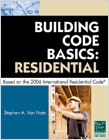
Description: Building Code Basics Series - 2006 International Residential Code is the first in the new Building Code Basics series, a series dedicated to presenting high-quality, practical building code information in an organized, user-friendly format. This straightforward, focused approach introduces code requirements with non-threatening, non-code language, allowing readers to gain confidence in their understanding of the material. Code references are also included, and when paired with these non-technical explanations, they are a valuable addition to the book's resources. This book focuses on the basics of the residential code, with topic coverage that corresponds to the order of construction, beginning with sitework and foundations, and ending with the fire and life-safety and environmental requirements of the finished building. Technically accurate and easy to understand, this is the perfect resource for beginning inspectors. Product Benefits: - full-color illustrations help readers to visualize correct code application
- glossary of code and construction terms clarifies key terminology as it applies to the code
- requirements for plumbing, mechanical, fuel gas and electrical systems and equipment are included for well-rounded coverage
Table of Contents: Preface
Part I
Code Administration and Enforcement
Chapter 01: Introduction to building codes
The building codes: scope and limitations
International Building Code
International Mechanical Code
International Fuel Gas Code
International Plumbing Code
International Residential Code (IRC)
Dwellings and townhouses
Manufactured homes
Accessory buildings and structures
Existing structures
Chapter 02: Legal aspects, permits and inspections
Code adoption
Adoption of the IRC
Amending the IRC
Appendices
Local and state laws
Authority
Authority and duties of the building official
Interpretations
Alternative methods and modifications
Permits
Permit application
plans and specifications
Fees
Permit issuance
Inspections
Required inspections
Other inspections
Certificate of occupancy
Board of appeals
Part II
Site Development
Chapter 03: Site preparation: building location, excavation, fill, and grading
Location on property
Fire separation distance
?Separation distance from property line
Location of foundations adjacent to slopes
Site preparation
General requirements
Soil properties
Fill
Storm drainage
Part III
Structural
Chapter 04: Structural Design Criteria
Prescriptive and performance
Basic loads (live and dead)
Live loads
Dead loads
Deflection
Wind, snow, seismic and flood loads
Wind
?Exposure category
?Hurricanes
?Tornadoes
?Storm shelter
Snow
Earthquake
Floods
Chapter 05: Footings, foundations and retaining walls
Materials
Concrete
Masonry
Wood
Footings
Footing size
Footing depth
Foundations
Concrete
Masonry
Wood
ICF
Foundation drains
Dampproofing and waterproofing
Retaining walls
Chapter 06: Framing
Floors
Walls
Ceilings
Roof
Part IV
Finishes and Weather Protection
Chapter 07: Interior and exterior finishes and weather protection
Interior finishes
Gypsum board
Plaster
Bathrooms and other areas
Carpet
Wood
Tile
Exterior wall covering
Water and moisture management
Masonry and stone veneer
Siding
EIFS and stucco
Flashing
Doors and windows
Roof covering
Asphalt shingles
Wood shingles and shakes
Other roof coverings
Flashing
Part V
Health and Safety
Chapter 08: Floor layout, egress, and other safety considerations
Room sizes
Ceiling heights
Doors
Stairs
Emergency escape
Safety glass
Protection from fall (window sill heights and guards)
Means of egress
Chapter 09: fire safety
Smoke ala... |