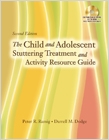
Product Benefits: - A CD-ROM contains all handouts and appendices in Microsoft Word and PDF formats. Save, print, and edit to customize for your clinical practice.
- A robust appendix contains a sample treatment program including sample therapy activities for use in the therapy room, in the home, and by the client.
- Additional chapter devoted to research findings on the neurology of stuttering and why clinicians should be familiar with this important research area.
- New informational chapter on the SpeechEasy in-the-ear device that has attracted a great deal of attention in the news media and on popular television talk shows, as well as in the professional community.
- Expanded and updated information included in most chapters, including assessment, stuttering modification techniques, rationale for treatment, evidence based practice, the development of IEPs for children with fluency disorders, and parent-provided stuttering treatment for preschool children.
- Provides an almost unlimited number of solutions by offering hundreds of therapy ideas and activities that can be used standalone or in conjunction with one another.
- Facilitates comprehension with logical, clear organization that lays the groundwork on stuttering in Part I and focuses on therapeutic activities in Part II.
- Draws powerful connections between therapy goals and the rationale and key research that support them.
- Encourages accurate assessments and relevant solutions with detailed assessment protocols and suggestions for interpreting findings.
- Offers supplemental tools that complement the information provided with the appendices, offering many useful forms, including handouts for parents and teachers in English and Spanish.
Table of Contents: Preface.
Contributors.
Acknowledgments.
Testimonials.
Foreword.
About the Authors.
Part I.
1. Helping Parents Learn about Stuttering in Children: Information for Clinicians, Students, and Parents.
2. Strategies for Counseling Parents of Children Who Stutter.
3. Strategies for Assessment of Fluency Disorders.
4. Explaining the Progress of Treatment and Recovery to Children and Parents.
5. Strategies for Developing Individualized Education Programs.
6. Working with Teachers.
7. Basic Stuttering Therapy Skills: Therapy Principles, Activities, and Evidence-Based
8. Direct and Indirect Therapy for Preschool Children.
9. Strategies for Teaching Normal Speech Production and Fluency-Enhancing
10. Strategies for Desensitization and Teaching the Causes of Stuttered Speech
11. Strategies for Modifying Stuttered Speech
12. Transfer and Maintenance.
13. Strategies for Cluttering Evaluation and Therapy.
14. Stuttering and the Brain: Contemporary Neuroimaging Research.
15:The In-The-Ear SpeechEasy Device and the Influence of Altered Auditory Feedback.
Part II.
Goal 1: Parent and Caregiver Involvement.
Goal 2: Teacher and Peer Education.
Goal 3: Success in Working with Young Children.
Goal 4: Determining What Is Interfering with Normal Speech Production.
Goal 5: Establishing Fluency Through Increasingly Longer and More Complex Stimuli.
Goal 6: Facilitating Adequate Breath Support.
Goal 7: Controlling Speaking Rate.
Goal 8: Establishing Light Articulatory Contacts and Movements.
Goal 9: Facilitation of Oral Motor Planning and Coordination.
Goal 10: Desensitization Intervention.
Goal 11: Reduction of Avoidance Behaviors.
Goal 12: Modification of the Stuttering Moment.
Goal 13: Facilitation of Development of Self-Awareness and Self-Monitoring Skills
Goal 14: Facilitation of a Positive Attitude toward Communication and Improved Self-Confidence in Communicative Competence
Goal 15. Transfer and Maintenance of Fluency into Everyday Speaking Situation.
Goal 16:Cluttering Therapy
Handout A: Children's Speech, Language, and Hearing History (English).
Handout B: Recommended Parent Interview Questions (English).
Handout C: ASHA Oral Mechanism Examination for Children and Adults (English).
Handout D: Fluency Evaluation Results (English).
Handout E: To the Parents of the Nonfluent Child (English).
Handout F: To the Teacher of the Nonfluent Child (English).
Handout G: Follow-Up and Fluency Maintenance(English).
Handout H: Fluency Information from the Teacher.
HANDOUT I: Stuttering Severity Rating
Handout J: Available Resources.
Handout A: (Spanish) Historial Médico del Habla, Lenguaje y Audición.
Handout B: (Spanish) Preguntas Recomendadas para Entrevistas con los Padres.
Handout C: (Spanish) Examen de ASHA del Mecanis... |